About Us
Lorem ipsum dolor sit amet, consectetur elit, sed do eiusmod tempor incididunt ut labore et magna aliqua.
Lorem ipsum dolor sit amet, consectetur elit, sed do eiusmod tempor incididunt ut labore et magna aliqua.
Whether you're a professional athlete, a weekend sports enthusiast, or someone who enjoys an active lifestyle, a sports injury can significantly affect your performance and daily routine.
A twisted knee during cricket, a ligament injury while playing football, a shoulder dislocation in the gym, or persistent knee pain after a fall can all limit your mobility and confidence.
Early diagnosis and appropriate treatment are essential to restore joint stability, prevent long-term damage, and help you safely return to your normal activities.
Dr. Raviraj Solanki is an Orthopedic, Joint Replacement & Arthroscopy Surgeon based in South Bopal, Ahmedabad, providing comprehensive care for sports injuries using modern arthroscopic techniques and evidence-based rehabilitation.
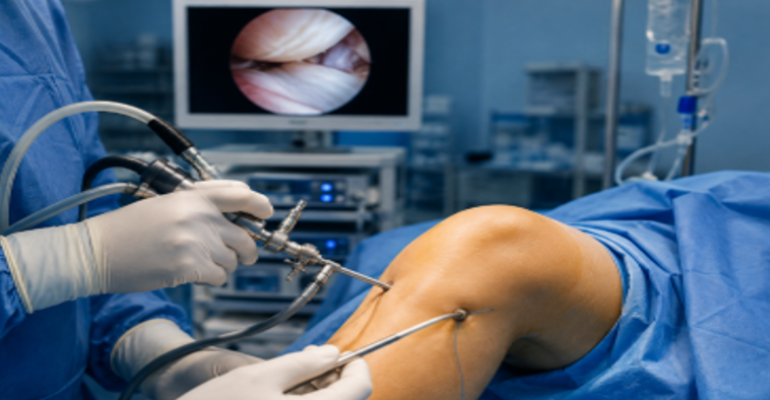
Arthroscopy is a minimally invasive surgical technique that allows the surgeon to diagnose and treat joint problems through small incisions using a high-definition camera and specialized instruments.
Compared to traditional open surgery, arthroscopy generally offers:
Smaller incisions
Less soft tissue damage
Reduced postoperative pain
Faster recovery
Earlier rehabilitation
Better cosmetic results
Arthroscopy is commonly performed for conditions involving the knee, shoulder, and other joints.
The ACL is one of the major stabilizing ligaments of the knee.
ACL injuries commonly occur during sudden twisting movements while playing sports such as cricket, football, badminton, basketball, or kabaddi.
Symptoms may include:
A popping sensation
Immediate swelling
Knee instability
Difficulty returning to sports
Depending on the severity of the injury and the patient's activity level, treatment may involve rehabilitation or arthroscopic ACL reconstruction.
The meniscus acts as a shock absorber within the knee joint.
Meniscal injuries can occur during sports, twisting movements, or even routine daily activities.
Patients often complain of:
Knee pain
Swelling
Locking of the knee
Difficulty squatting
Pain while climbing stairs
Whenever possible, preserving the meniscus through arthroscopic repair is preferred over removal.
Damage to the articular cartilage can lead to persistent pain, swelling, and early arthritis if left untreated.
Early diagnosis helps preserve joint function and improve long-term outcomes.
High-energy trauma or sports injuries may involve damage to multiple ligaments of the knee.
These complex injuries require careful evaluation, individualized surgical planning, and structured rehabilitation.
We provide comprehensive care for:
Shoulder dislocations
Rotator cuff tears
Labral injuries
Shoulder impingement
Recurrent instability
Treatment ranges from physiotherapy to advanced arthroscopic surgery, depending on the condition.
Sports frequently lead to ankle ligament sprains, instability, tendon injuries, and cartilage damage.
Early treatment helps prevent chronic instability and recurrent injuries.
Every sports injury is different.
Treatment depends on:
Age
Activity level
Type of sport
Severity of injury
Functional goals
Occupation
Future sporting expectations
Not every patient requires surgery.
Whenever possible, non-operative treatment is considered before recommending surgical intervention.
Depending on the patient's condition, arthroscopic procedures may include:
ACL Reconstruction
Meniscus Repair
Partial Meniscectomy
Synovectomy
Cartilage Procedures
Loose Body Removal
Shoulder Arthroscopy
Rotator Cuff Repair
Labral Repair
Each procedure is planned individually to achieve the best functional outcome.
Modern arthroscopic surgery offers several advantages compared to traditional open procedures.
Patients may benefit from:
Smaller incisions
Reduced blood loss
Less postoperative pain
Faster rehabilitation
Earlier return to work
Better preservation of healthy tissues
Excellent functional outcomes
Recovery varies depending on the injury, procedure, and rehabilitation protocol.
Successful treatment does not end with surgery.
A carefully planned rehabilitation programme is essential to restore:
Strength
Balance
Flexibility
Coordination
Joint stability
Confidence
Physiotherapy plays a vital role in helping patients safely return to sports and everyday activities.
Choosing the right orthopedic surgeon is one of the most important decisions after a sports injury.
Patients trust Dr. Raviraj Solanki because of his commitment to precision, patient education, and personalized care.
Every patient undergoes a detailed clinical assessment supported by appropriate imaging before treatment decisions are made.
Treatment plans are tailored according to the patient's injury, lifestyle, occupation, and sporting goals.
Special interest in minimally invasive arthroscopic procedures for knee and shoulder conditions.
Whenever possible, the priority is to repair and preserve the patient's natural joint structures rather than remove or replace them.
Recovery continues well beyond surgery with individualized rehabilitation and regular follow-up.
Whether you're recovering from an ACL injury, a meniscus tear, a shoulder injury, or another sports-related condition, timely treatment can make a significant difference in your recovery.
With accurate diagnosis, modern arthroscopic techniques, and a structured rehabilitation programme, our goal is to help you regain confidence, restore joint function, and safely return to the activities you enjoy.
Book a consultation with Dr. Raviraj Solanki and take the first step towards a stronger, healthier, and more active future.
No. Treatment depends on the patient's age, activity level, occupation, degree of instability, and sporting goals. Some patients recover with rehabilitation, while others benefit from ACL reconstruction.
Arthroscopy is a minimally invasive surgical procedure that allows orthopedic surgeons to diagnose and treat joint problems using a small camera and specialized instruments through tiny incisions.
Some small tears may heal with conservative treatment, while larger or unstable tears often require arthroscopic repair or trimming.
Most patients gradually return to sports between 6 and 9 months, depending on rehabilitation progress and the type of sport.