
About Us
Lorem ipsum dolor sit amet, consectetur elit, sed do eiusmod tempor incididunt ut labore et magna aliqua.
Lorem ipsum dolor sit amet, consectetur elit, sed do eiusmod tempor incididunt ut labore et magna aliqua.
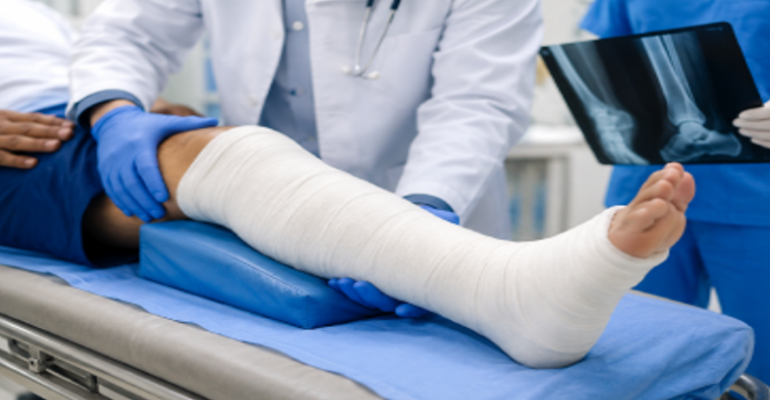
Accidents happen without warning. A fall at home, a road traffic accident, a sports injury, or a workplace injury can result in fractures that require prompt evaluation and appropriate treatment.
Timely orthopedic care plays a crucial role in ensuring proper bone healing, restoring function, and helping patients return to their normal lives as early as possible.
Dr. Raviraj Solanki is an Orthopedic, Joint Replacement & Arthroscopy Surgeon based in South Bopal, Ahmedabad, providing comprehensive fracture and trauma care using modern fixation techniques, evidence-based treatment, and individualized rehabilitation.
Whether your injury requires a cast, minimally invasive fixation, or complex fracture surgery, every treatment plan is designed to promote safe healing and the best possible functional outcome.
Every fracture is different.
Treatment depends on the patient's age, bone quality, fracture pattern, associated injuries, occupation, and functional requirements.
We commonly manage:
Upper Limb Fractures
Clavicle fractures
Proximal humerus fractures
Humeral shaft fractures
Elbow fractures
Forearm fractures
Wrist fractures
Hand fractures
Lower Limb Fractures
Hip fractures
Femur fractures
Patella fractures
Tibia fractures
Ankle fractures
Foot fractures
Periarticular Fractures
Fractures occurring around major joints require accurate reduction and stable fixation to restore joint alignment and function.
These injuries often demand meticulous planning and specialized surgical techniques.
Complex Trauma
High-energy injuries may involve:
Multiple fractures
Joint injuries
Soft tissue injuries
Open fractures
Such injuries require comprehensive evaluation and individualized management.
Successful fracture treatment involves far more than simply fixing a broken bone.
The primary goals are:
Restore normal bone alignment
Achieve stable fixation
Preserve surrounding soft tissues
Promote early mobilization
Minimize complications
Restore maximum function
Every patient receives a treatment plan based on the nature of the injury and individual recovery goals.
Depending on the fracture, treatment may include:
Conservative Management
Many stable fractures heal successfully without surgery.
Treatment may involve:
Cast application
Splints
Functional braces
Regular follow-up X-rays
Physiotherapy
Surgical Fracture Fixation
Some fractures require surgery to restore normal anatomy and allow early movement.
Modern fixation techniques may include:
Plates and screws
Intramedullary nails
Cannulated screws
External fixation
The surgical technique is selected according to the fracture pattern and patient-specific requirements.
Hip fractures are among the most serious injuries in elderly patients and usually require urgent orthopedic evaluation.
Early surgery, when appropriate, allows:
Earlier walking
Reduced medical complications
Better recovery
Improved independence
Treatment may involve fracture fixation or hip replacement, depending on the type of fracture, bone quality, and the patient's overall health.
Recovery continues long after the fracture has healed.
A structured rehabilitation programme helps restore:
Joint movement
Muscle strength
Balance
Coordination
Confidence
Our goal is to help patients return safely to work, sports, and daily activities as early as possible.
Every fracture is carefully evaluated using clinical examination and appropriate imaging before treatment planning.
No two fractures are identical.
Treatment recommendations are tailored according to the injury, patient expectations, and functional goals.
When surgery is required, evidence-based fixation methods are used to promote stable healing and early rehabilitation.
From emergency fracture management to rehabilitation and long-term follow-up, patients receive coordinated orthopedic care throughout their recovery.
Patients and families are guided through every stage of treatment with clear explanations and realistic expectations.
Healing time varies depending on:
Type of fracture
Patient's age
Bone quality
Overall health
Treatment method
Most fractures heal within 6 to 12 weeks, although complete recovery and return to full activity may take longer in complex injuries.
Regular follow-up and physiotherapy play an important role in achieving the best outcome.
A fracture can interrupt your daily life, but with timely treatment and appropriate rehabilitation, most patients recover well and return to their normal activities.
Whether you have sustained a simple fracture or a complex traumatic injury, Dr. Raviraj Solanki is committed to providing personalized orthopedic care focused on safe healing, early recovery, and long-term function.
Schedule your consultation today and take the first step toward a complete recovery.
No. Many fractures heal successfully with casts, splints, or braces. Surgery is recommended only when necessary to restore proper alignment, stability, or joint function.
Most fractures heal within 6–12 weeks, although recovery depends on the type of fracture, age, and overall health.
You should seek immediate evaluation if you experience severe pain, deformity, inability to bear weight, swelling, numbness, or suspected fracture after an injury.