
19Sep
The Hip Joint Replacement Surgery procedure can help individuals who are having hip pains and restricted movements get back their active life. If conservative therapies including medicine, physiotherapy, modification of lifestyle, or any other treatment does not yield positive results, hip joint replacement can be considered according to the state of the joint.
If you are thinking of undergoing Hip Joint Replacement Surgery in Ahmedabad, then it is important that you know about the healing process. Even though everyone takes different periods to heal from a surgery, knowing about the stages of the healing process will definitely benefit you.
Dr. Raviraj Solanki assists his patients with orthopedic consultation, especially with regards to the conditions associated with hips.
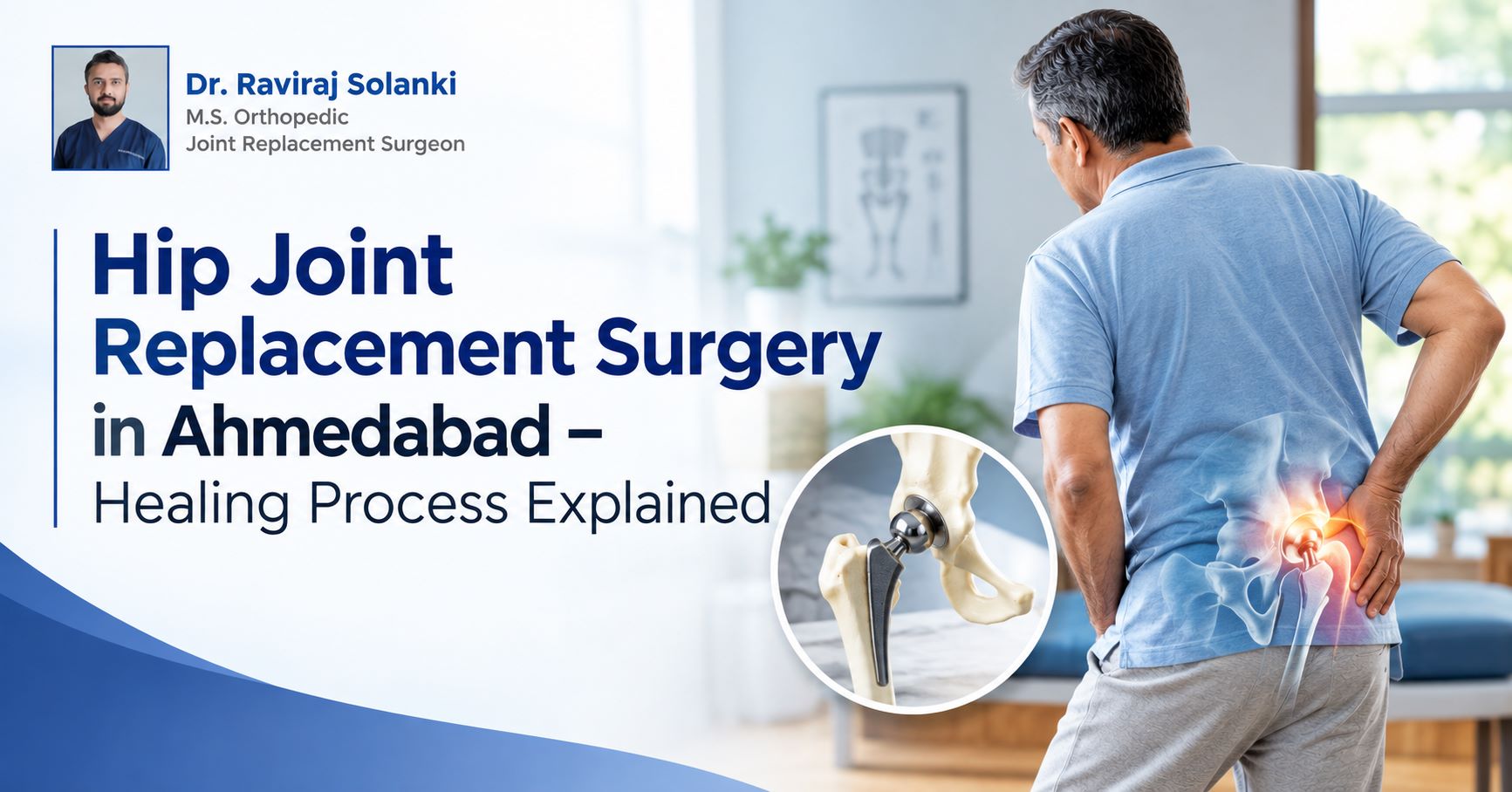
Hip Joint Replacement Surgery is the process of replacing any damaged part of the hip joint using prosthesis implants. This surgery could be necessary in cases such as osteoarthritis, rheumatoid arthritis, hip fracture, and many others that could cause great pain.
For a diagnosis to be made, the orthopedic surgeon will look at the patient's symptoms, medical history, general health, and diagnostics.
Recovery Timeline for Hip Replacement Surgery
Recovery from hip replacement surgery will take time. There are a number of issues that could speed up or slow down the recovery process, including age, physical health, muscle strength, type of surgery performed, and compliance with rehabilitation guidelines.
Under proper medical supervision and rehabilitation, patients can start working on improving their mobility.
Based on your medical status and recommendations from the doctor who performs the operation, exercise can be initiated very soon after surgery. In this case, a physiotherapist will help you perform simple exercises and will show how to move on foot with the proper assistance.
The first few days after surgery include:
Pain and swelling
Limited movement in the operated leg
Temporary use of a walker or other walking aids
Simple physiotherapy exercises
Mastering sitting, standing, sleeping and other safe postures
It is necessary to follow the instructions provided by an orthopedic surgeon in this initial period.
Weeks 1-3: Early Recovery Period
In the first weeks after the surgery, one primarily takes care of pain management, increased mobility, and physical activity.
In this period, it may still be necessary to use walking aids such as a walker, crutches or other types of aids. Physiotherapy helps to increase the strength of the muscles around the joint, improve mobility and balance.
With further recovery, walking over short distances and performing daily activities becomes easier and easier. The speed of recovery differs from patient to patient.
Weeks 4–6: More Mobility
Within four to six weeks of surgery, most people will find that they are more mobile and comfortable. In some patients, based on their progress, walking without as much assistance is possible.
The exercises done in your physiotherapy sessions can assist with improving:
Hip/leg strength
Flexibility
Balance
Gait pattern
Functional movements
Remember that every patient heals at a different rate. An increase in physical activity needs to be done based on the advice of your surgeon.
Weeks 6-12: Return to Routine Activities
In six to twelve weeks from the time of surgery, there are chances of going back to the usual routine life depending upon the progress of healing.
Activities like walking longer distances and performing daily tasks become easy at this stage. Returning to work becomes possible for some individuals in this period based on the nature of their job.
Any high impact activities should be avoided unless authorized by the orthopedic surgeon.
Even after three months, the process of healing continues because there will be an improvement in strength, mobility, stability, and flexibility.
The doctor would suggest some exercises that would make you strong and flexible. It is also necessary to maintain good body weight and perform physical exercises according to your condition.
Dr. Raviraj Solanki will be able to give you further recommendations according to your progress and needs in recovery.
The time of your recovery could vary according to several variables such as:
Age and fitness
Condition of the hip joint
Muscle strength before surgery
Surgery type
Presence of other diseases
Physiotherapy
Physical activity after surgery
Taking preventive measures
Preparing your home for the recovery process and getting help initially can also make your life easier.
If you have prepared yourself for hip replacement surgery in Ahmedabad, below is some general advice that will facilitate your recovery process:
Listen to your doctor: Visit your doctor for follow-ups and observe the precautions advised by him/her.
Engage in physiotherapy sessions: It is crucial for the improvement of your strength, balance, and movements.
Go slow with physical activities: Even if you start feeling well, do not try hard.
Use mobility aids: Mobility aids such as walker or stick will help you walk without injuries until you regain your balance.
Maintain a healthy life: You need to eat healthy and exercise, as well as maintain healthy body weight.
Watch out for warning signs: Pain, swelling, fever, wound problem or anything out of the ordinary needs to be reported.
When Will You Be Able to Resume Regular Activities?
All patients have different timelines of recovery. While some patients can recover fast, there might be other patients who need more time for recovery along with physiotherapy.
The activities like driving, working out, long walks, etc., depend on the rate of your recovery and an assessment by your doctor. Your orthopedist will guide you about the resumption of your activities.
If you experience pain in your hip and have problems in walking, sleeping, working, and performing other daily activities, it is advisable to consult an orthopedic specialist to get a better understanding of the problem and treatment.
Patients looking for a Hip Replacement Surgeon in Ahmedabad should consult Dr. Raviraj Solanki who will help you get an orthopedic consultation and learn about your hip joint problem, the possible treatments, surgery and the processes after the surgery.
A comprehensive assessment must be done before having hip joint replacement surgery.
Recovering from hip joint replacement surgery is a gradual process. Exercise, physiotherapy, proper physical activities and regular visits to your orthopedic surgeon will help you recover.
If you are suffering from hip joint pain and difficulty walking, you need to consult Dr. Raviraj Solanki for diagnosis of your condition and to know if Hip Joint Replacement Surgery in Ahmedabad is suitable for you.